
So, what is a franchise, anyway?
A franchise is essentially a way to build your own business by operating as a representative of another person’s or company’s business. The “other” person and company is called the franchisor, while the owner of the new business, you, is called the franchisee.
When you purchase a franchise, instead of starting a brand-new business, you’re able to use an already well-established business name/brand and products. To be able to do so, however, you have to agree to abide by the rules set forth by the franchise system, which can include paying certain fees outlined within a contract that both parties sign before opening up shop.
In addition to adhering to the aforementioned guidelines and making payments to the franchisor for permission to utilize their brand, products, and systems, a franchisee typically receives assistance and training in the form of various business systems and training programs provided by the franchisor. In this regard, franchisees also receive access to trademark, service mark, and other business-related intellectual properties owned by their own business.
Franchise Basics
A franchise can be thought of as a partnership. As the owner of your own business, you have complete control over how you manage and run your store. However, you operate your store as part of a larger group or network of stores all operating under a single brand. This is true for everything from local health clubs to national fast-food chains. Many franchises will offer a wide variety of products and services.
There are two main types of franchising relationships:
Product Distribution Franchising:
This is a franchise relationship that requires a person to sell the products of the franchisor with the use of the franchisor’s brand. Examples include auto-dealerships as well as soft-drink distributors.
Business Format Franchising:
The most popular model. Here, the franchisor gives you everything you need: training, marketing strategy, operating manuals, and ongoing support to run the business their way.
How Does Franchising Work?

At its core, a franchise is a business that operates under a licensing model — a contractual relationship between two independent parties: the franchisor, owner of the franchise brand and business model, and the franchisee, buyer of the license to use said brand and run their own version of the franchise under it.
In what’s known as a business format franchise, the franchisor licenses not just a name or product but an entire franchise system, a fully developed playbook for running a successful business.
Ongoing support is necessary to help potential franchisees successfully reproduce the franchisor’s successes in their own version of the franchise. The tools, training, and support they need to replicate the brand’s success in new franchise locations.
Here’s what a typical licensing relationship includes:
Branded Products and Services
You are going to sell the franchisor’s trade – i.e., the exact products or services that have produced the brand’s initial success. Whether you’re offering smoothies, tutoring services, fitness training, or home repairs, you receive the advantage of a recognized name and established product/service lines that people trust.
Business Systems and Processes
In addition to receiving point-of-sale (POS) software as well as customer service protocols, you also gain access to the business operations system developed by the franchisor that is used by all franchise locations. Therefore, utilizing the systems and procedures can result in an increased level of consistency among all locations and improve your probability of achieving success.
Employee Training
Your franchisor provides structured training for you and your employees in the day-to-day operations of your franchise as well as longer-term plans that can help you grow your business. This type of support will be especially beneficial to you, especially if you have limited experience in the industry you’re going into or if you’ve transitioned from being an employee at a large corporation to running your own small business.
Marketing Plan and Brand Strategy
Many franchises use their brand nationally, regionally, or both, so they will provide you with information about the national and regional advertising campaigns. Additionally, your franchisor should provide you with information on how to market locally. In addition to this, there should be a local marketing plan developed for you that includes digital tools, promotional template ideas, ways to get people walking through your door, and developing a loyal customer base within your community.
Real Estate and Development Support
The real estate and development assistance provided by many franchisors can include helping find a suitable area for the franchise, as well as assisting in leasing the space and building out the space, since the environment is crucial to a successful operation of the franchise.
Ongoing Business Advisory
The ongoing advisory services of a quality franchisor do not end once the business is opened, it includes periodic contact through phone or email, operational information, and ongoing coaching to ensure that you are meeting your goal for the success of the business.
Quality Control and Brand Consistency
Maintaining brand integrity across multiple franchise locations is key. That’s why the franchisor provides systems and audits to ensure each unit meets brand standards from service quality to store layout.
For providing the complete support described above, you as the franchisee pay an initial fee for opening up a location and then continue to pay royalties on your gross sales at a percentage rate. The continuing payment from you as franchisee funds continuing support, the development of your brand, and the innovation of the system.
Additionally, this relationship has some very strict regulatory guidelines. For example, in the United States, the FTC governs franchising through the requirement that franchisors provide an FDD to all prospective franchisees before signing any agreement. This document helps protect potential franchisees by offering transparency before they sign any agreement.
Franchise Investment: The Costs

Investing in a franchise is a powerful way to launch a business based on a proven concept, but like any serious venture, it comes with a price tag. You’re not just buying the right to use a trade name; you’re buying into the entire system that makes the franchise run smoothly. That includes training, support, operational guidance, marketing, and more.
Here’s a breakdown of the costs involved in a franchise investment:
Initial Franchise Fee
You are charged this fee to get into a franchise company. The fees will be paid at the time you join as an investment in your future success. Each franchise company has different initial fees based upon their brand name recognition and what they offer. Initial fees may start low (a couple thousand), but many established companies charge very high fees (over $100,000).
Ongoing Royalties
These are recurring payments you make to the franchisor, typically calculated as a percentage of your sales revenue. Furthermore, royalty payments fund the ongoing operational support for your business (training updates, system improvements, etc.) and the overall growth of the brand. As such, this money continues to keep the engine running once you have started down the road with your business.
Advertising and Marketing Fees
Many franchises require franchise owners to pay into a National and Regional advertising and marketing fund. These funds help finance larger-scale brand strategies; i.e., TV ads, social media presence, website management, national print ads, etc. The objective of national and regional advertising and marketing funds is to create increased visibility for all franchise locations so they can also benefit from “collective” exposure locally.
Start-Up and Operational Costs
Beyond the franchise fee, there are real-world costs to get your doors open and operational. This can include:
- Leasing or purchasing real estate and lease deposits
- Equipment and technology systems
- Initial inventory and supplies
- Business licenses and insurance
- Build-out and signage
- Hiring and training staff
Start-up costs vary widely depending on the franchise concept, location, and business model. For instance, a home-based service franchise may have lower overhead compared to a brick-and-mortar restaurant or retail store.
Additional Fees to Watch
Franchisers may add a fee for using their own exclusive tech to operate their software or other technical services. If you wish to renew your franchise agreement at the end of an original term, some franchisers may require that you pay a renewal fee. There is often a minimum amount that you are expected to spend on advertising to support local area visibility of your company’s brand.
Franchise Agreement: Read Before You Sign

The franchise agreement is binding, an agreement to create a legal contract to establish the relationship between the franchisor and the franchisee. The agreement will address:
- The amount you pay for your initial fee and ongoing royalty.
- Protected territory, if there is one.
- How long the agreement lasts and what your options are in renewing the agreement.
- What operating requirements you have as a franchisee.
- What circumstances would allow for termination or dissolution of the relationship and previous litigation.
You should consider having a lawyer who specializes in franchises to review this document with you. This is not simply a signature; it will determine the future of your business.
Franchise Disclosure Document (FDD)
Under the FTC’s Franchise Rule, franchisors are required to provide the prospective buyer with the Franchise Disclosure Document (FDD) at least 14 days before receiving any payment from the buyer. The document is mandatory and includes a minimum of 23 sections of information, for example:
- The franchisor’s background information
- Costs of opening and maintaining a franchise.
- Franchise contracts and legal obligations
- Your estimated financial performance expectations from this franchise.
- A list of all active franchises along with their location and contact information and an approximate number of former franchises.
- Any existing or past litigation history, including bankruptcy.
Reading the FDD is a must. It’s your roadmap to understanding the franchisor’s business and how your own franchise will operate.
Franchise Funding

Franchise business ownership gives you the structure of a proven system with the independence of running your own business. So, in essence, it’s a hybrid model – less isolated than working on your own, but still an independent venture.
Funding options include:
- Small Business Administration (SBA) Loans
- Conventional Bank Loans
- Rollover for business startups (ROBS)
- Portfolio loans
- Franchisor financing or third-party lenders or financial institutions
Whichever method you use, being smart about how you spend your own money and doing your homework will be important.
Franchising and the E-2 Visa
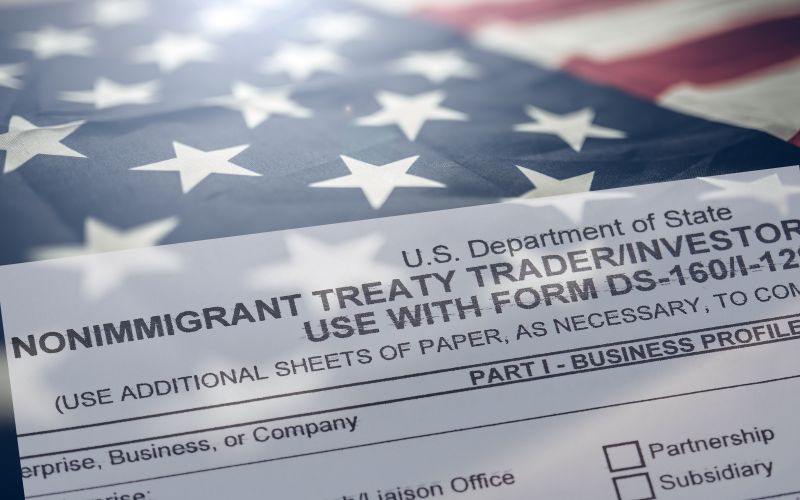
Franchising is one of the most E-2-friendly business models out there. Why? Because it checks all the boxes U.S. immigration looks for in an E-2 visa investment:
- Substantial Investment: Most franchise businesses require a meaningful capital outlay, which meets the visa’s requirement for a “substantial investment.”
- Real Operating Business: In most cases, you are not purchasing an asset; rather, you will be establishing a real operational business providing products or services to the general public.
- Business Development Support: A franchisor can provide assistance and support as you develop your operation. When it comes to your E-2 visa application, this will allow you to establish that your business is operating and has credibility.
- Job Creation: Since many franchises have the potential to grow at such a rapid pace, they create employment opportunities for United States citizens, which adds strength to your case for an E-2 visa.
From quick-service restaurants to home services, fitness studios to tutoring centers, many franchises are tailor-made for E-2 visa investors looking for a stable, scalable path into the U.S. market.
Choosing an E-2 Friendly Franchise
When looking at franchises as an E-2 visa candidate, the first big decision will be selecting the right franchise that is best suited for you. That’s where we differentiate from simply choosing a business. When choosing a franchise, you’re essentially making a choice that supports both your immigration objectives and the potential to establish a scalable, profitable model in the U.S. marketplace.
Look for a Proven E-2 Track Record
Many franchisors have dealt with the E-2 visa Process before. They’ve worked with immigration attorneys, assisted investors in preparing their business plan, and know what documents you will need to demonstrate to USCIS that your investment was substantial and legitimate. Using a franchise with prior E-2 experience can lead to fewer surprises and a much smoother path.
Choose a Recognized Brand with Strong Market Presence
A well-known brand is important to invest in before entering a very competitive marketplace. Investing in a well-known brand provides you with an advantage by allowing you to tap into the reputation that has been developed over time; a large, loyal client base and a demand already established for their product or service.
When starting up your own business, this type of brand equity will help you establish immediate credibility within your local market. It also helps the U.S. government understand what kind of investment they are reviewing (a viable investment) because it is a well-established brand.
Prioritize Training, Support, and Franchise Law Compliance
Opening a company in a foreign land presents a high mountain to climb. Businesses that train their franchisees, onboard them, and provide help for an extended period have made it much easier to learn what needs to be done. A quality franchise will be aware of how to operate under the laws of franchising.
The franchise will provide you with a very detailed Franchise Disclosure Document (FDD) which will show you all the costs and give you a complete understanding of your rights and responsibilities when you become a franchiser. When you are going to move from one part of the world to another to start a brand-new venture, having the stability of knowing exactly what you need to do makes this a valuable experience.
Invest in High-Growth Industries
High-growth sectors are particularly attractive to e-2 investors as these are the areas that have a strong likelihood of increasing revenue quickly. Some examples of high-growth sectors include the health and wellness industry, education services, pet care, eco-friendly products and services, and home repair and remodeling.
These types of businesses typically allow for flexible entry points for new owners and provide consumers with basic needs that support the type of employment the E-2 visa application process is designed to create.
Find Operational Flexibility and Scalable Growth Potential
Many E-2 visa applicants begin their businesses on a small scale; however, many wish to have the ability to expand upon it. Some franchises can provide both a hands-on experience and a semi-absentee experience that allows owners to continue growing their business.
In addition, some franchises are structured in such a way that encourages multi-unit ownership and regional growth, potentially ideal options for those who would like to invest more heavily into their business at a later date.
You will also need a legitimate franchisor, who is more than simply a name, logo, and marketing materials. A good franchisor will support you throughout your immigrant process, develop and review your business plan, assist you in building a strong team, and ultimately aid in developing and executing your business strategy.
Franchise Industry Outlook

Today’s franchise industry encompasses a wide variety of opportunities beyond fast food. Many successful franchises operate in:
- Education and tutoring, where demand for supplemental learning continues to grow
- Fitness and wellness, driven by health-conscious consumers and evolving lifestyles
- Automotive services, from repairs to detailing, keep drivers safe and on the road
- Retail shops, which help distribute products more efficiently across local communities
- Healthcare and business services, offering specialized support and convenience
- Home services, including cleaning, maintenance, remodeling, and more
Franchises will be able to adapt to local markets while at the same time providing consistent branding. The combination of these two elements has been shown to increase customer loyalty as compared to other forms of business.
The International Franchise Association (IFA), an organization that provides resources on ethical franchising, conducts research in the franchise industry, and advocates for fair laws that protect the rights of franchisees. With changing consumer expectations and emerging technology, the franchise industry is continually adapting and competing with changes made in their systems, expansion of services, and response to economic trends.
FAQs
A franchise is often a strong choice for E-2 visa investors because it offers a proven business model, established brand recognition, and ongoing operational support. These advantages can help demonstrate that your investment is in a real, active business with the potential to create jobs and generate revenue.
Before signing a franchise agreement, carefully review the initial franchise fee, royalty structure, contract term, renewal options, territory rights, operational requirements, and termination clauses. It’s also advisable to have a franchise attorney review the agreement to ensure you fully understand your legal obligations.
The Franchise Disclosure Document (FDD) provides essential information about the franchisor, including startup costs, financial obligations, litigation history, and franchisee responsibilities. Reviewing the FDD helps prospective franchisees make informed investment decisions before committing to a franchise.
Many E-2 investors choose franchises in industries with consistent demand, such as home services, health and wellness, education, pet care, business services, and quick-service restaurants. These sectors often offer scalable business models and opportunities for long-term growth.
A franchise consultant can help identify franchise opportunities that align with your investment budget, business goals, and E-2 visa requirements. They can also assist with franchise selection, business planning, and connecting you with professionals who specialize in immigration and franchise law.
Final Thoughts: Is Franchising Right for You?
Franchising is much more than a method of doing business; it can be an entry point into the United States’ commercial business environment for E-2 visa investors. However, franchising can provide a structured and supportive approach to entering the U.S. market in contrast to “going it alone,” as many entrepreneurs do.
Before you sign any franchise agreement, ask yourself:
- Am I ready to follow a system while still taking ownership?
- Do I understand the franchise model, costs, and legal requirements?
- Have I reviewed the Franchise Disclosure Document with a legal expert?
- Does this franchise align with my E-2 visa strategy and long-term goals?
If the answer is yes, you might be standing at the edge of a life-changing opportunity.
Ready to Explore E-2 Franchise Opportunities?
Are you in the process of researching potential franchise opportunities for an E-2 visa, or have you narrowed down your list to a few franchises? Regardless of where you are on this journey, you must work with professionals who have expertise in both franchising and U.S. Immigration law.
Would you like assistance in finding E-2 qualified franchise businesses that fit within your desired investment parameters? If so, we would be happy to connect you with an E-2 visa consultant, assist in creating your business plan, and provide you with the information necessary to feel confident moving forward.